

A cracked or broken tooth can happen unexpectedly. Whether you’ve bitten down on something hard or been caught in a knock during sport, many patients search for ways to fix a broken tooth in Perth as soon as symptoms appear. You may notice pain when biting, sensitivity to hot or cold temperatures, or a rough or sharp edge around the affected tooth. In some cases, a crack may cause very few symptoms initially.
The appropriate treatment depends on several factors, including the location and extent of the damage, the health of the dental pulp and the amount of remaining tooth structure. At Connolly Dental, we assess each tooth individually before discussing the treatment options that may be suitable for fixing cracked teeth and restoring comfortable, confident biting.
What Should You Do If You Crack or Break a Tooth?
If you have cracked or broken a tooth, gently rinse your mouth with water. If there is swelling or discomfort, a cold compress may be applied to the outside of the face.
Avoid chewing on the affected side until the tooth has been assessed. Very hot or cold foods and drinks may also cause sensitivity in some cases.
If you find a broken tooth fragment, keep it and bring it with you to your dental appointment. Depending on the nature of the fracture, the fragment may be useful during the clinical assessment.
Some cracks can affect the inner dental pulp or extend into the deeper structures of the tooth. If you are experiencing significant pain or swelling or have sustained a dental injury, contact our Emergency Dentist Perth team at Connolly Dental to discuss an emergency appointment.
How Is a Cracked Tooth Assessed?
Not all cracks are the same. Some involve only a small area of enamel, while others may extend more deeply into the tooth. The symptoms you experience do not always indicate the full extent of the damage.
Your dentist may assess the tooth using a combination of clinical examination, dental imaging and other diagnostic tests where appropriate. The aim is to evaluate the remaining tooth structure, the dental pulp and the surrounding tissues before discussing possible treatment options. Digital scanning may also be used for selected restorative treatments where clinically appropriate.
Fixing Cracked Teeth: What Treatments Are Available?
Treatment for fixing cracked teeth will depend on the type and extent of the fracture.
Composite Resin Bonding for Chipped Tooth Repair
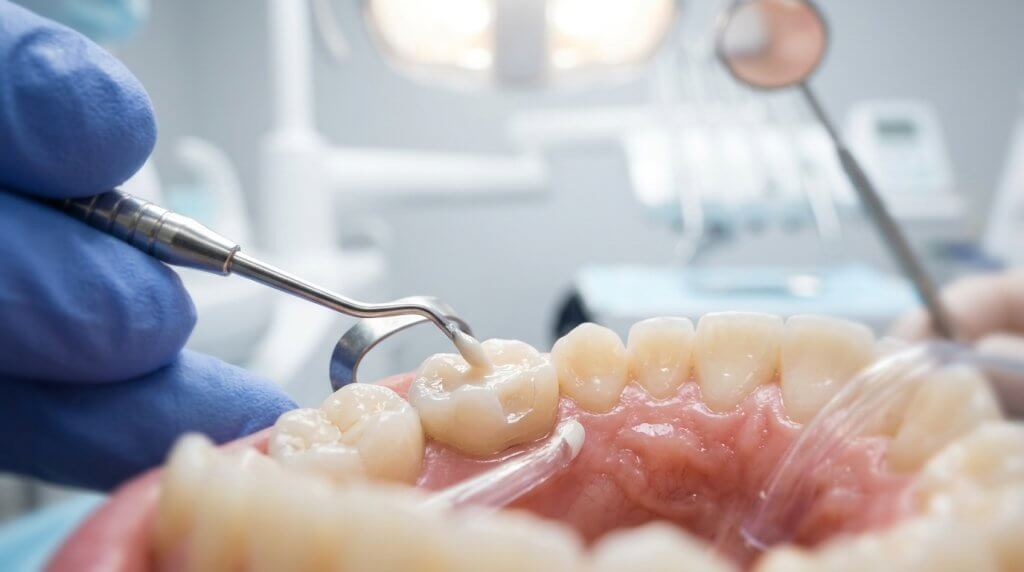
For some small chips or areas of tooth damage, composite resin bonding may be considered as a straightforward option for chipped tooth repair in Perth.
Composite resin is a tooth-coloured restorative material that can be selected to closely match the surrounding tooth. The suitability and aesthetic outcome of composite treatment will depend on the individual tooth and clinical situation.
Dental Crowns and Ceramic Restorations
A tooth with more extensive structural damage may require additional protection or restoration.
Depending on the remaining tooth structure and the location of the damage, a dental crown or another ceramic restoration, such as porcelain veneers, may be considered. The shade, shape and design of the restoration can be planned by our cosmetic dentist with consideration of the surrounding teeth, bite and individual clinical requirements.
Root Canal Treatment
If a crack or dental injury affects the pulp inside the tooth, root canal treatment may be required in some cases. Your dentist will assess the tooth and discuss whether root canal treatment is considered appropriate based on the clinical findings.
Tooth Extraction
In some situations, a tooth with an extensive fracture may not be restorable. If the tooth cannot be predictably restored, extraction may be recommended following clinical assessment. Your dentist will discuss the findings, available options and relevant risks and benefits with you before treatment.
What Happens If a Cracked Tooth Cannot Be Restored?
If a tooth requires extraction, there may be several options for managing the resulting space. Depending on your individual circumstances, these may include a dental implant, dental bridge or removable prosthesis. In some clinical situations, leaving the space may also be discussed.
Dental implants are one option for replacing missing teeth, involving the surgical placement of an implant within the jawbone to support a dental restoration. Implants are not suitable for every patient. General health, oral health, available bone and other individual factors may influence whether dental implant treatment is appropriate. As with any surgical procedure, this treatment carries potential risks and complications, which your dentist will discuss along with the potential benefits and associated fees.
Supporting Patients With Dental Anxiety
We understand that an unexpected dental injury or toothache can be stressful, particularly for patients who already feel anxious about dental treatment.
Our team aims to explain the assessment findings and proposed treatment options clearly so you can ask questions and understand the recommended next steps. Local anaesthetic may be used where clinically appropriate. If you experience dental anxiety or have concerns about treatment, please let our team know when arranging your appointment.
Need an Emergency Dentist in Perth?
A cracked or broken tooth can sometimes be a dental emergency, especially if there is significant pain, swelling or bleeding. Our Emergency Dentist Perth service is here to help you get seen quickly, assess the damage and start you on the path to fixing your cracked or broken tooth as soon as possible.
Fix Broken Tooth Perth: Book Your Appointment at Connolly Dental
If you have cracked, chipped or broken a tooth, a dental assessment can help determine the extent of the damage and the treatment options available to fix your broken tooth in Perth.
Contact Connolly Dental to arrange an appointment. Following assessment, your dentist can discuss the treatment options that may be appropriate for your individual situation, including the potential benefits, risks and associated fees.
Call Connolly Dental on (08) 9300 1122.
Treatment recommendations and outcomes vary between individuals and are subject to clinical assessment. All dental procedures carry potential risks and benefits, which will be discussed as part of the informed consent process.